
Industry News
Curation by industry experts
Hot Articles
Popular Tags
Class-100 Cleanroom Certification: Costs, Delays, and Compliance Gaps
For finance decision-makers, class-100 cleanroom certification is more than a technical milestone—it is a budget, timeline, and risk-control issue that directly affects project ROI. Hidden validation costs, approval delays, and overlooked compliance gaps can quickly turn a planned investment into an expensive operational setback. Understanding these factors early helps organizations protect capital, accelerate market readiness, and avoid costly corrections later. In food and beverage processing, aseptic filling, dairy fluid handling, meat processing, and high-speed flexible packaging all rely on controlled environments where certification quality directly influences product safety, audit readiness, and long-term operational stability.
What does class-100 cleanroom certification actually verify?
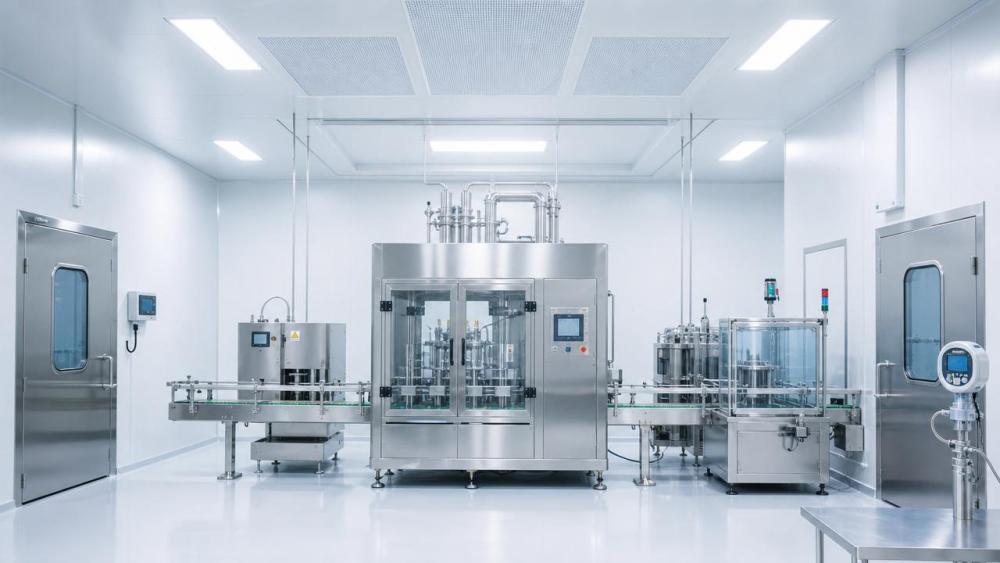
Class-100 cleanroom certification confirms that a controlled environment can consistently maintain no more than 100 particles of 0.5 microns or larger per cubic foot of air under defined conditions. In modern terminology, this is often aligned with ISO Class 5, but the certification process is not limited to particle counting alone. It usually includes airflow volume, air change rates, pressure differentials, HEPA or ULPA filter integrity, temperature and humidity control, recovery performance, and in many regulated applications, microbial monitoring support.
For sectors tracked by AFPS, the significance is practical. Aseptic beverage filling lines use class-100 cleanroom certification to protect sterile zones during high-speed bottling. Dairy homogenization and UHT-connected systems depend on controlled hygienic barriers to reduce contamination risk. Flexible packaging operations handling sensitive foods may also need equivalent environmental verification around filling or sealing stations. Certification therefore acts as a bridge between engineering design, compliance claims, and production reliability.
A common misunderstanding is that passing one test means the cleanroom is permanently compliant. In reality, class-100 cleanroom certification reflects a documented state at a defined moment, based on test scope, occupancy assumptions, and process configuration. Any major equipment movement, utility change, filter replacement, or line speed increase can affect the certified condition.
Why do costs for class-100 cleanroom certification often exceed the original budget?
The direct invoice for testing is only one part of the total spend. The real cost of class-100 cleanroom certification often grows because organizations underestimate design revisions, utility balancing, documentation preparation, and operational interruptions. In food-grade clean environments, even small performance deviations can trigger expensive rework.
Typical hidden cost drivers include:
- Retesting after airflow imbalance, pressure instability, or failed filter leak tests
- Downtime caused by construction dust, sanitation conflicts, or production scheduling restrictions
- Additional monitoring devices for particle, pressure, or environmental data logging
- Documentation gaps requiring new SOPs, calibration records, and deviation logs
- Facility modifications such as pass-throughs, door seals, lighting corrections, or ceiling penetrations
In aseptic and ultra-clean food applications, costs also rise when the cleanroom is treated as a standalone room rather than an integrated process zone. Certification success depends on line layout, people flow, material transfer, CIP/SIP interactions, and packaging speed. If the room is validated before the process is stabilized, the site may pay twice—once for certification, and again for corrective testing after commissioning changes.
A more reliable budgeting method separates capital cost, validation cost, and lifecycle compliance cost. That means including periodic recertification, preventive maintenance, sensor calibration, environmental trending, and training refreshers from the start.
What causes delays in class-100 cleanroom certification projects?
Schedule overruns usually come from coordination failure, not from the certification test itself. A cleanroom can be physically complete yet still not ready for class-100 cleanroom certification because supporting prerequisites were not closed. This is common in multi-system projects involving HVAC, compressed air, process piping, electrical controls, sanitation design, and automation integration.
The most frequent delay sources are:
- Incomplete HVAC balancing before certification booking
- Construction residues or late finishing work that compromise cleanliness
- Missing calibration certificates for differential pressure gauges or particle counters
- Unresolved deviations between design drawings and installed conditions
- Late changes to filling equipment, conveyors, or enclosure geometry
In food and packaging projects, another delay factor is operational ambiguity: should certification be performed “at rest,” “operational,” or both? If this is not defined in advance, teams may pass one condition but fail to meet customer or regulatory expectations in actual production mode. For high-speed pouch packaging and aseptic filling lines, airflow turbulence from machine motion and personnel activity can materially change results.
The most effective way to prevent delay is to use a readiness checklist before formal testing. That checklist should confirm room cleaning, HVAC balancing, instrument calibration, filter installation records, utility stability, line configuration lock, and document completeness.
Where do compliance gaps usually appear, and why are they risky?
A site may obtain class-100 cleanroom certification and still face compliance exposure if the underlying control system is weak. Certification proves a measured condition; compliance requires ongoing evidence that the condition is maintained, understood, and acted upon. The risk becomes serious when audit expectations extend beyond engineering performance into procedural discipline and traceability.
Common compliance gaps include poorly defined gowning procedures, inconsistent environmental monitoring frequencies, undocumented maintenance interventions, and weak change control when production equipment is adjusted. In aseptic beverage and dairy operations, even a minor enclosure modification or airflow obstruction near a sterile zone can undermine the assumptions behind the original class-100 cleanroom certification.
Another gap appears when companies rely on one standard while customers or authorities expect another supporting framework. For example, ISO classification, HACCP expectations, hygienic design principles, and internal food safety programs may all intersect. If those requirements are not mapped together, the facility may be technically certified but commercially exposed during tender reviews, customer audits, or export qualification.
Risk is not limited to nonconformance findings. Compliance gaps can lead to delayed launches, rejected batches, forced remediation shutdowns, and a loss of confidence in hygienic claims. In highly visible food processing environments, that reputational cost can exceed the original certification budget.
How should class-100 cleanroom certification be evaluated before investment approval?
A sound investment review looks beyond “Can the room pass?” and asks “Can the process remain compliant at target output?” That is especially important in integrated food manufacturing where cleanroom performance interacts with heat treatment, sterile transfer, packaging automation, and sanitation cycles. Class-100 cleanroom certification should be evaluated against product risk, throughput goals, line flexibility, and future regulatory expectations.
A practical decision framework is shown below:
This review helps distinguish a certification expense from a strategic control measure. In many AFPS-observed applications, the value of class-100 cleanroom certification is strongest when it supports shelf-life assurance, export acceptance, and stable high-speed output without contamination-driven interruptions.
What are the most useful steps to reduce cost, delay, and compliance risk?
The most effective approach is to treat class-100 cleanroom certification as a cross-functional readiness program rather than a final inspection event. Early alignment between facility design, process engineering, hygienic zoning, and quality documentation can eliminate many avoidable failures.
Five actions provide the highest return:
- Define certification scope early. Specify standards, room states, testing points, acceptance limits, and required reports before installation is finalized.
- Link room design to process reality. Account for machine heat loads, operator paths, material transfer, sanitation cycles, and actual production speeds.
- Build a document package in parallel. Include drawings, balancing records, calibration certificates, SOPs, deviation logs, and change-control forms.
- Run a pre-certification audit. An internal readiness review can identify airflow obstructions, pressure drift, or procedural weaknesses before formal testing.
- Plan lifecycle control. Set recertification intervals, filter maintenance, environmental trending, and retraining triggers from the beginning.
When these steps are built into project governance, class-100 cleanroom certification becomes faster to achieve and easier to sustain. That matters in sectors where hygienic credibility is directly tied to line utilization, brand trust, and access to international business opportunities.
Quick FAQ table: key questions about class-100 cleanroom certification
In summary, class-100 cleanroom certification should be viewed as a business control mechanism, not just a technical checkbox. The true decision factors are total cost, certification timing, operational fit, and the ability to maintain compliance after startup. In advanced food and packaging environments, stronger planning around validation scope, documentation discipline, and process integration can protect investment value while supporting safer, faster, and more credible production. The next practical step is to map the cleanroom requirement against product risk, line design, and audit expectations before final budget approval or construction freeze.
Recommended News