
Industry News
Curation by industry experts
Hot Articles
- UHT & CIP SystemsDairy Processing Equipment Buying Guide: Capacity, CIP Design, and Total Cost Factors
- Cold Aseptic FillingHow to Compare Aseptic Processing Solutions for Heat-Sensitive Dairy Products
- UHT & CIP SystemsDairy Fluid Processing Explained: Core Steps, Critical Control Points, and Common Risks
Popular Tags
Cold Chain Packaging for Pharmaceuticals: Key Failure Risks to Check
In cold chain packaging for pharmaceuticals, small failures can quickly become major quality and safety incidents. For quality systems, transport partners, and storage operations, the challenge goes far beyond keeping products “cold.” Effective cold chain packaging for pharmaceuticals must protect temperature-sensitive medicines against thermal drift, seal failure, physical shocks, moisture ingress, documentation gaps, and delayed exception response. When any of these weak points are missed, stability can be compromised, batch release can be questioned, and regulatory exposure can rise. The following guide outlines the main failure risks to check, why they matter, and how to strengthen control across transport and storage.
What Cold Chain Packaging for Pharmaceuticals Must Achieve
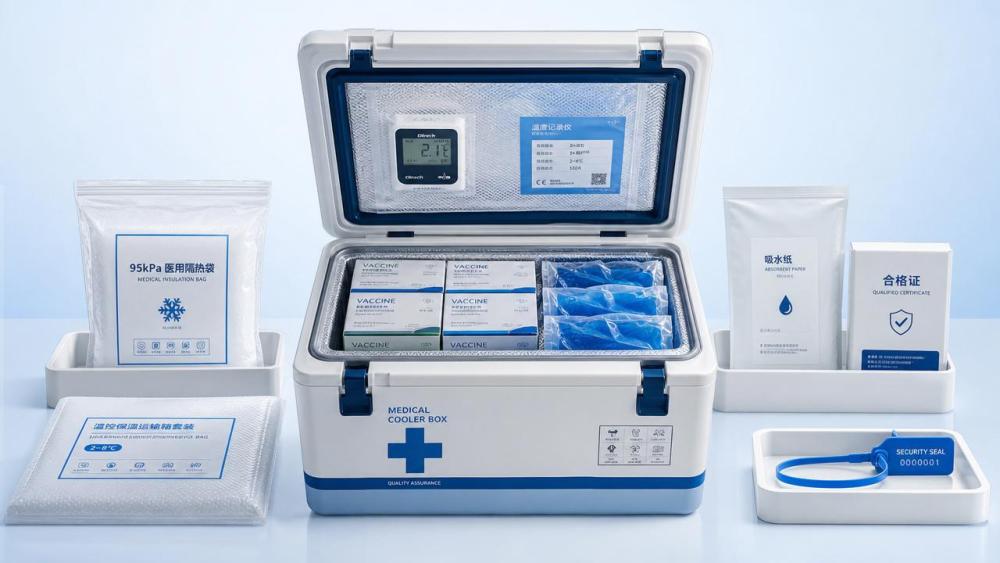
At its core, cold chain packaging for pharmaceuticals is a controlled protection system designed to keep products within validated temperature ranges while preserving sterility, potency, and traceability. It usually combines insulated containers, refrigerants such as gel packs or phase change materials, secondary barriers, temperature indicators or data loggers, and handling instructions. The packaging is not a passive shell; it is an engineered system that must perform under real transport conditions such as airport delays, warehouse staging, customs clearance, and last-mile handoffs.
In pharmaceutical distribution, the acceptable temperature range can differ significantly by product. Vaccines, biologics, cell therapies, insulin, diagnostic reagents, and certain specialty injectables each carry different sensitivity profiles. Some products are damaged by heat excursion, while others are equally vulnerable to accidental freezing. This is why cold chain packaging for pharmaceuticals must be validated against lane profile, duration, ambient extremes, pack-out design, and expected handling abuse.
A practical way to view the system is through four linked control goals: maintain required temperature, prevent contamination or tampering, resist mechanical damage, and preserve verifiable records. If one goal fails, the others often become harder to defend during deviation review or audit.
Current Industry Pressure Points and Why Failure Risks Are Rising
The risk profile for cold chain packaging for pharmaceuticals has expanded in recent years. Product portfolios now include more biologics and personalized therapies with narrow stability windows. Global shipping routes are more variable, climate conditions are more extreme, and distribution networks often involve multiple handover points. At the same time, compliance expectations are increasing around Good Distribution Practice, excursion investigation, and end-to-end visibility.
Several warning signals deserve close attention:
For operations that also follow broader packaging and processing intelligence trends, a familiar lesson applies: high performance depends on system integration. Just as aseptic filling or high-speed pouch packaging relies on controlled interfaces, cold chain packaging for pharmaceuticals succeeds only when insulation, sensors, workflow, and documentation work as one verified process.
Key Failure Risks to Check in Cold Chain Packaging for Pharmaceuticals
The most important review area is thermal design failure. A shipper may look compliant on paper but still underperform if refrigerant quantity, conditioning method, payload loading pattern, or insulation thickness is wrong. Validation data should match actual lane duration, summer and winter extremes, and realistic opening or delay scenarios. If pack-out instructions are unclear or inconsistently executed, even a well-designed shipper can fail.
Seal integrity is another frequent weak point. Damaged tape lines, poorly closed lids, crushed edges, or punctured liners can create hidden thermal leaks. In addition, moisture ingress may degrade corrugated structures or labels, especially where condensation forms. A simple visual pass is not enough; receiving and dispatch checkpoints should confirm closure quality and visible tamper condition every time.
Temperature monitoring failure is often overlooked until after a deviation. Data loggers may be missing, activated late, placed in the wrong location, or downloaded too slowly to support rapid disposition. Real-time devices help, but only if alert thresholds, escalation paths, and response ownership are clearly defined. Without those controls, monitoring becomes passive evidence rather than active protection.
Physical handling abuse also deserves routine review. Drops, vibration, compression stacking, and prolonged tarmac exposure can all damage cold chain packaging for pharmaceuticals. Sensitive products may survive temperature limits but still suffer from container breach, cracked primary packaging, or movement that dislodges refrigerants from their validated positions.
- Incorrect refrigerant conditioning, causing unintentional freezing or early thermal depletion
- Incomplete pack-out assembly or missing insulation components
- Sensor placement that does not represent true product exposure
- Uncontrolled staging time before dispatch or after arrival
- Poor labeling, orientation marks, or route-specific handling instructions
- Lack of qualified return logistics for reusable thermal packaging
Business Value of Stronger Control and Early Risk Detection
Improving cold chain packaging for pharmaceuticals is not only about avoiding product loss. It strengthens release confidence, shortens deviation review, and supports a more defensible compliance posture. Better packaging control reduces waste, lowers replacement and expedited freight cost, and helps maintain continuity for critical therapies that cannot easily be remanufactured or resupplied.
There is also a broader operational value. Robust thermal packaging programs create cleaner handoff standards between packaging, warehousing, transport, and quality functions. This mirrors best practices seen across advanced food and packaging systems, where process safety and efficiency are achieved through validated design, monitoring discipline, and traceable execution. In both sectors, the strongest systems are the ones that anticipate failure before it reaches the customer or patient.
Typical Risk Patterns by Product and Distribution Scenario
Not every shipment faces the same risk. Reviewing cold chain packaging for pharmaceuticals by product type and route profile helps prioritize controls and testing effort.
Practical Checks and Preventive Actions
A strong control program for cold chain packaging for pharmaceuticals should combine design qualification with routine operational verification. The objective is to catch drift early, before an excursion becomes a quality event.
1. Reconfirm lane-based validation
Review whether qualified packaging still reflects current shipping lanes, seasonal extremes, payload size, and handover timing. If routes changed after validation, performance assumptions may no longer hold.
2. Standardize pack-out execution
Use visual work instructions, refrigerant conditioning logs, and independent checks for critical shipments. Consistent assembly is one of the most cost-effective ways to improve cold chain packaging for pharmaceuticals.
3. Tighten staging and transfer control
Measure pre-dispatch and post-arrival dwell time. Many excursions occur outside transit, especially on docks, in consolidation zones, or during late receiving.
4. Verify sensor strategy
Check logger placement, activation timing, calibration status, and data retrieval speed. Monitoring points should represent product exposure, not only the easiest place to insert a device.
5. Audit receiving inspection discipline
Receiving checks should document shipper condition, seals, evidence of wetting, refrigerant state, and logger status before product release or relocation. Weak receiving practice can erase the value of upstream control.
Next-Step Focus for More Reliable Pharmaceutical Cold Chains
A practical next step is to map the top ten failure points in current cold chain packaging for pharmaceuticals workflows, then compare them against actual deviation history, lane data, and packaging qualification records. This quickly shows whether the greatest risk sits in design, execution, monitoring, or partner handoff.
Where performance data is limited, start with a focused review of three areas: thermal hold time versus real transit time, pack-out consistency, and alert response speed. These checks often reveal the largest hidden gaps with the least operational disruption. Over time, a more resilient system can be built through periodic requalification, structured training, and closer integration between packaging intelligence, transport reality, and compliance expectations.
In the end, reliable cold chain packaging for pharmaceuticals is achieved not by a single material choice, but by disciplined control of the full protection system. When insulation performance, sealing quality, handling standards, and monitoring response are all verified, product integrity is far better protected from origin to final point of use.
Recommended News