
Industry News
Curation by industry experts
Hot Articles
- Ultrasonic PortioningHow to Evaluate an Ultrasonic Cutting Machine Supplier for Food Portioning Lines
- Commercial InsightsSmart Packaging Technology Explained: Sensors, Indicators, and Track-and-Trace Use Cases
- Multi-head WeighersMulti-Head Weighers for Nuts Packaging: Which Accuracy, Speed, and Feed System Fit Best?
Popular Tags
Aseptic Fluid Handling Systems: Valve Choices That Reduce Contamination Risk
In aseptic fluid handling systems, valve selection can make the difference between controlled sterility and costly contamination events. For quality control and safety management in food, beverage, dairy, and other high-hygiene operations, the right valve architecture directly influences cleanability, sterility assurance, product recovery, and production uptime. Choosing valves only by pressure rating or initial cost often overlooks the true contamination pathways: dead legs, seal failures, poor drainability, trapped product films, and unsafe maintenance access. This article explains how to evaluate valve choices in aseptic fluid handling systems so contamination risk is reduced without compromising process speed or flexibility.
Why valve selection deserves a structured review
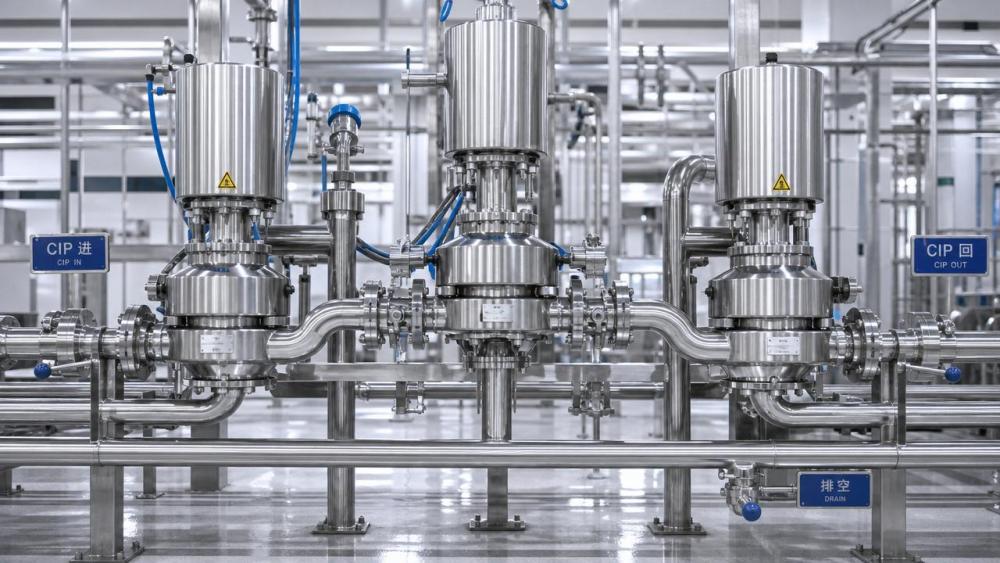
Aseptic fluid handling systems operate where microbiological control, CIP/SIP performance, and fast changeovers must work together. In these environments, even a well-designed sterilization regime can be undermined by one unsuitable valve body, one elastomer with poor steam resistance, or one branch connection that creates stagnant product zones. A structured review helps separate valves that are merely hygienic from valves that are truly suited to aseptic duty.
This matters across the broader food processing landscape covered by AFPS, from aseptic beverage filling lines and industrial dairy homogenizers to sauce dosing skids and flexible packaging feed systems. Wherever sterile or ultra-clean liquid transfer is required, the wrong valve can increase bioburden risk, generate allergen carryover, extend downtime, and create documentation challenges during audits against EHEDG, 3-A, FDA, or internal validation standards.
Core evaluation points for valve choices in aseptic fluid handling systems
Use the following points to compare valve designs in aseptic fluid handling systems. Each item supports contamination control and should be verified during specification, FAT, installation review, and routine revalidation.
- Prefer valve bodies with zero or minimal dead leg geometry so product, condensate, and cleaning chemicals cannot remain trapped after production or SIP cycles.
- Check whether the valve is fully drainable in its installed orientation, because horizontal pockets and inverted chambers often become unnoticed microbial harborage points.
- Select aseptic diaphragm valves where sterile barrier integrity is critical, especially at tank outlets, sample points, and branch connections exposed to repeated sterilization.
- Use mixproof double-seat valves in product routing zones when line segregation is essential and simultaneous cleaning and production must occur safely.
- Verify seat lift, leakage chamber design, and leak detection features to ensure any seal failure is exposed rather than hidden inside the valve body.
- Review wetted surface finish, weld quality, and internal transitions; rough surfaces and abrupt geometry changes increase fouling, product film retention, and cleaning variability.
- Confirm elastomer and diaphragm materials are compatible with product chemistry, UHT temperatures, caustic wash, acid wash, and repeated steam sterilization cycles.
- Choose valve designs with validated CIP/SIP coverage and documented cleanability under realistic flow rates, temperatures, hold times, and viscosity ranges.
- Assess actuator and control top feedback reliability so incomplete opening, incomplete closing, or failed sterilization position changes are identified immediately.
- Minimize maintenance intrusion by selecting valves with easy diaphragm or seal replacement procedures that reduce exposure time during servicing.
- Standardize valve families where possible to simplify spare parts, cleaning validation records, operator training, and troubleshooting across multiple aseptic fluid handling systems.
- Confirm certification and documentation packages support traceability, including material compliance, surface data, pressure ratings, and maintenance instructions for hygienic audits.
Which valve types usually perform best in high-hygiene service
Aseptic diaphragm valves
For many aseptic fluid handling systems, aseptic diaphragm valves are the first choice wherever sterile boundaries must be maintained. Their defining advantage is the hermetic separation between process fluid and the moving actuator components. A properly designed diaphragm valve reduces crevices, minimizes hold-up, and supports effective steaming. These valves are especially valuable on tank bottoms, sterile air interfaces, inoculation points, dosing lines, and sampling loops.
Mixproof valves
Mixproof valves are highly useful in complex aseptic fluid handling systems where different product streams, CIP circuits, and sterile water paths intersect. Their double-seat design and leakage chamber create physical separation between incompatible media. When engineered for hygienic service and installed correctly, they reduce cross-contamination risk during simultaneous operations. However, not every mixproof valve is ideal for the highest aseptic demands; sealing architecture, steam barrier support, and validation data must be examined carefully.
Single-seat hygienic valves
Single-seat valves remain common because they are economical and robust, but in aseptic fluid handling systems they require closer review. They can perform well in less critical transfer sections or non-sterile utility zones, yet may not provide the same contamination barrier as diaphragm or fully validated aseptic valve designs. Their suitability depends on seat geometry, drainage, cleaning coverage, and whether branch configurations create dead legs.
Butterfly and ball valves
Butterfly and ball valves are compact and popular in general process piping, but they often present limitations in aseptic fluid handling systems. Shaft penetrations, cavities, and seal interfaces can retain product or become difficult to sterilize fully. Some specialized hygienic versions are acceptable in selected non-critical points, yet they should not be assumed suitable for sterile product contact without detailed cleanability and sterilization evidence.
Application notes across common processing environments
Aseptic beverage filling lines
In beverage applications, aseptic fluid handling systems must support rapid throughput, frequent flavor changes, and strict microbiological security. Valve selection should prioritize fast drainage, low product loss, and repeatable SIP performance. Aseptic diaphragm valves are often preferred near sterile tanks, fillers, and recirculation loops, while carefully validated mixproof valves help maintain separation between product and CIP circuits during high-speed operation.
Dairy and cultured products
Milk, cream, yogurt bases, and protein beverages challenge aseptic fluid handling systems because fats and proteins can create persistent films on internal surfaces. Valves should have polished wetted areas, smooth transitions, and elastomers resistant to both thermal cycling and aggressive cleaning chemistry. Any hidden cavity increases the chance of residue retention and post-clean contamination, particularly after long production campaigns.
Liquid food, sauces, and particulates
Viscous products and formulations with particulates place extra stress on aseptic fluid handling systems. Valve selection must balance hygiene with shear sensitivity and passage size. Oversimplified valve downsizing can create product hang-up, while unsuitable seat geometry may crush particulates or obstruct cleaning flow. In these cases, validation should include worst-case viscosity and actual product rheology, not water-only testing.
Plant-based and functional beverages
Plant proteins, fibers, stabilizers, and micronutrient systems can leave stubborn deposits in aseptic fluid handling systems. Valve materials and internal shapes should support complete residue removal and stable sterility over repeated recipe changes. Because allergen and label claim integrity are often critical, cross-contact prevention should receive the same attention as microbiological contamination control.
Commonly overlooked contamination risks
One frequent mistake is focusing on the valve alone instead of the installed valve assembly. Even excellent valves in aseptic fluid handling systems can fail hygienically when connected to poor tees, oversized branches, uneven orbital welds, or instruments mounted with long stagnant stubs.
Another overlooked issue is seal life drift. Diaphragms, seats, and O-rings gradually lose elasticity under steam, pressure pulses, and chemical attack. Contamination risk rises long before a catastrophic leak appears, so preventive replacement intervals should be based on validated cycle data rather than visible damage only.
Control logic can also undermine hygienic intent. If an actuator feedback fault allows a valve in aseptic fluid handling systems to sit partially open during SIP or product transfer, a hidden contamination pathway may develop. Position confirmation, alarm strategy, and interlocks deserve as much scrutiny as the mechanical valve specification.
Finally, many contamination events begin during maintenance. Opening a valve in an uncontrolled way, using non-traceable replacement parts, or reinstalling seals without torque and orientation discipline can compromise sterile assurance. Maintenance procedures must match the hygiene level expected from the design.
Practical steps for implementation and verification
- Map all critical control points in aseptic fluid handling systems, then classify each valve by contamination impact, cleaning difficulty, and sterility significance.
- Replace generic valve specifications with performance-based criteria covering dead leg limits, drainability, SIP compatibility, and documentation requirements.
- Request hygienic design drawings and validation evidence, including internal geometry, material details, surface finish, and cleanability performance under real conditions.
- Run FAT and SAT protocols that test valve operation during product routing, CIP, SIP, and fault scenarios rather than relying on static acceptance only.
- Build maintenance plans around seal cycles, steam exposure, and product chemistry, with traceable replacement records for every critical valve location.
- Review changeovers and line modifications regularly, because new instruments, bypasses, or temporary hoses can compromise aseptic fluid handling systems unexpectedly.
Frequently asked questions
Are hygienic valves and aseptic valves the same?
No. Hygienic valves are designed for cleanability and food-safe service, but aseptic fluid handling systems often require a higher level of sterile barrier performance, steam resistance, and dead-leg control. Aseptic valves are a narrower category with more demanding design expectations.
Is the most expensive valve always the safest choice?
Not necessarily. The best valve for aseptic fluid handling systems is the one that matches the contamination risk, cleaning regime, product properties, and operating logic of that specific location. Overspecifying low-risk points can raise cost without adding measurable safety.
How often should valve designs be reassessed?
Reassessment is advisable after recipe changes, CIP chemistry changes, throughput increases, recurring environmental positives, seal failure trends, or any piping modifications. Aseptic fluid handling systems evolve over time, and the original validation basis may no longer reflect actual operating conditions.
Conclusion and next actions
Reducing contamination risk in aseptic fluid handling systems starts with understanding that valves are not simple on-off devices; they are microbiological control points. The strongest choices usually combine minimal dead space, full drainability, robust sterile barriers, validated CIP/SIP performance, and maintainable seal systems. When those features are reviewed systematically, valve selection supports safer products, more reliable compliance, and better line efficiency.
As an immediate next step, review the ten to twenty most critical valve locations in existing aseptic fluid handling systems and score them for dead-leg risk, drainage, seal integrity, and sterilization suitability. That practical audit often reveals the fastest path to lower contamination exposure and stronger hygienic performance across food and beverage operations.
Recommended News