
Industry News
Curation by industry experts
Hot Articles
Popular Tags
High-Pressure Processing vs Heat: When Is It Worth the Investment?
For finance decision-makers in food and beverage manufacturing, the real question is not whether high-pressure processing sounds innovative, but whether it delivers measurable returns. Compared with thermal methods, high-pressure processing can protect product quality, extend shelf life, and strengthen premium positioning—yet the capital burden is significant. This article examines when the investment makes strategic and financial sense.
What Finance Teams Are Really Evaluating in High-Pressure Processing
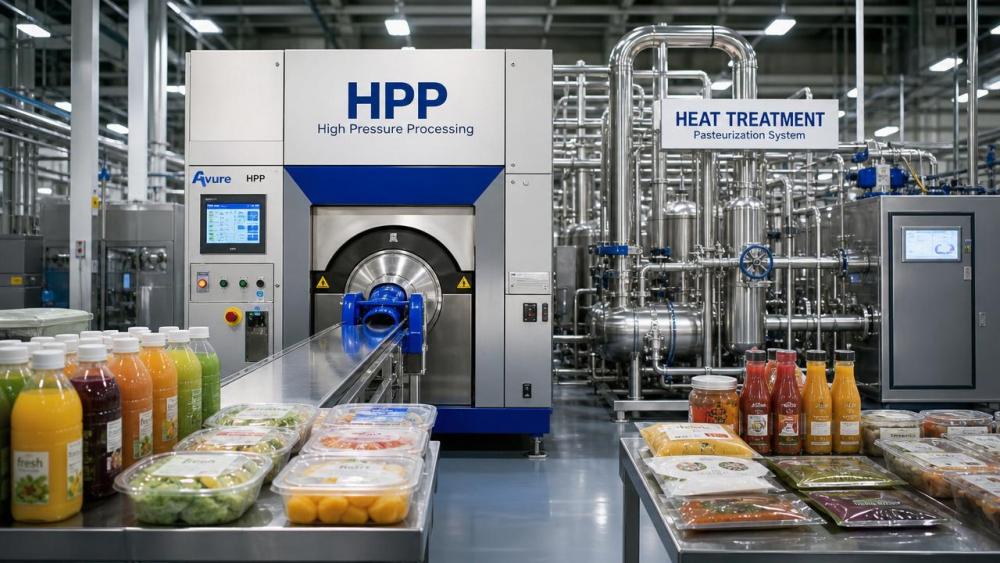
The search intent behind “high-pressure processing vs heat” is usually not academic. It is commercial. Readers want to know whether high-pressure processing can outperform thermal processing in ways that matter financially: margin improvement, waste reduction, market access, shelf-life gains, pricing power, and risk control.
For financial approvers, the comparison is rarely about which technology is “better” in general. It is about fit. High-pressure processing may preserve flavor, texture, and nutrients more effectively than heat in many chilled or minimally processed foods, but that advantage only matters if the business can convert quality into revenue, lower total cost, or both.
That is why the most useful evaluation framework is not equipment-first but business-case-first. Before discussing vessel size, throughput, or pressure levels, the right question is: which products, channels, and profit pools benefit enough from non-thermal processing to justify the investment?
In practical terms, high-pressure processing is most compelling when a manufacturer needs to extend refrigerated shelf life without sacrificing sensory quality, support clean-label positioning, reduce preservatives, or enter premium retail and export channels with stricter quality expectations. It becomes much less compelling when the product is highly price-sensitive, already stable under conventional heat, or sold in channels where shelf-life quality differentiation is not rewarded.
High-Pressure Processing vs Heat: The Financially Relevant Differences
Thermal processing remains the backbone of food safety for good reason. It is proven, scalable, and often more cost-efficient on a cost-per-unit basis, especially for high-volume products that tolerate heat well. For many sauces, shelf-stable beverages, soups, and products where cooked flavor is acceptable or expected, heat continues to deliver excellent economics.
High-pressure processing, by contrast, uses extremely high hydrostatic pressure to inactivate many pathogens and spoilage organisms while avoiding the thermal load that can degrade fresh taste, color, and certain nutrients. That makes it especially attractive for refrigerated juices, dips, salsa, guacamole, deli proteins, ready-to-eat meats, seafood items, wet salads, and some dairy-adjacent products where “fresh-like” quality directly affects purchasing decisions.
From a finance perspective, the key differences fall into five areas. First is capital intensity. High-pressure processing systems usually require meaningful upfront investment not only in the core unit, but also in packaging validation, floor layout, chilled logistics alignment, and operational training. Heat systems, especially established lines, may already exist or require lower expansion cost.
Second is throughput structure. Thermal processes often run continuously and efficiently at scale. High-pressure processing is usually batch-based, which can create different labor patterns, scheduling complexity, and bottleneck risk. If projected volumes are high and line balance is critical, throughput modeling becomes essential.
Third is product value realization. Heat can be cheaper, but if it reduces taste, texture, or nutritional appeal enough to lower repeat purchase rates or restrict premium pricing, then apparent savings may be misleading. High-pressure processing often earns its case through revenue protection as much as through cost reduction.
Fourth is shelf-life economics. If high-pressure processing adds enough days to meaningfully lower spoilage, improve fill rates, reduce markdowns, and expand distribution radius, then its payback can accelerate quickly. This is especially important for products moving through retail cold chains, foodservice networks, and e-commerce fulfillment where shelf-life variability directly hits working capital and write-offs.
Fifth is brand and compliance risk. In categories where microbial control failures can cause recalls, lost listings, or reputational damage, the value of a stronger safety strategy can be substantial, even if difficult to model precisely. For finance leaders, this does not mean assigning vague “strategic value.” It means incorporating downside risk reduction into approval logic.
When High-Pressure Processing Is Usually Worth the Investment
High-pressure processing tends to make financial sense when three conditions are present at the same time: the product is quality-sensitive, the market rewards that quality, and shelf-life extension creates operational gains. Remove one of those conditions, and the economics often weaken.
The first strong-fit scenario is premium refrigerated products. If the product competes on freshness, bright flavor, clean ingredients, or minimally processed perception, thermal treatment may damage the very attributes consumers are paying for. In that case, high-pressure processing helps preserve the product promise and defend price realization. Finance teams should look closely at categories where gross margin depends on premium positioning rather than commodity pricing.
The second scenario is short-shelf-life products suffering from waste, returns, or constrained distribution reach. A shelf-life gain of even several days can have major financial impact. It may allow fewer emergency production runs, more efficient inventory planning, lower retailer penalties, less spoilage, and access to more distant geographies. These are measurable effects, and they often matter more than abstract claims about technology leadership.
The third scenario is reformulation pressure. Brands increasingly want to reduce preservatives and maintain label simplicity. If conventional heat or chemical preservation undermines product positioning, high-pressure processing can support a cleaner formulation strategy. For financial approvers, this matters when clean-label claims drive either customer retention or retailer acceptance.
The fourth scenario is high-risk or high-consequence product categories, especially ready-to-eat refrigerated foods where microbial events can be commercially devastating. In these cases, better process control and stronger food safety positioning can lower the probability of severe losses. While not all risk reduction is visible in monthly P&L, it should still be treated as an economic variable.
The fifth scenario is contract or co-manufacturing models where differentiated processing capability attracts new business. Owning or securing access to high-pressure processing can become a commercial asset if customers actively seek it. In those cases, the decision is not only about processing cost but also about revenue enablement and capacity monetization.
When Thermal Processing Still Wins on Economics
There are many cases where heat remains the smarter investment. Finance leaders should be cautious about approving high-pressure processing simply because it appears advanced or aligns with innovation narratives. If the product can tolerate heat without meaningful loss of consumer acceptance, thermal methods will often be more economical.
This is particularly true for highly price-driven categories. If consumers are unwilling to pay more for fresher taste, cleaner labels, or improved texture, then the quality advantage of high-pressure processing may not convert into revenue. In such situations, the business may absorb extra cost without gaining either margin or market share.
Thermal processing also tends to outperform when very large continuous volumes are required. Batch-based high-pressure processing can become a throughput constraint unless the production model, SKU mix, and packaging flow are specifically optimized around it. A lower cost per unit from heat may outweigh the product-quality upside, especially in mainstream channels.
Another weak-fit case is shelf-stable strategy. If the commercial model depends on ambient distribution, long pantry life, and maximum logistics simplicity, then thermal technologies such as pasteurization, hot-fill, or UHT often remain superior system choices. High-pressure processing is powerful, but it does not replace every shelf-stability pathway.
Finally, if a company lacks the commercial discipline to capture the value created by better quality, the investment may disappoint. A processor that extends shelf life but does not renegotiate retail programs, optimize route-to-market, reduce waste, or support premium messaging may never realize the technology’s full return.
The ROI Questions Financial Approvers Should Ask Before Signing Off
A strong business case for high-pressure processing should answer a series of concrete questions. The first is revenue-related: will the product command higher pricing, stronger repeat purchase, improved conversion, or broader distribution because of the processing method? If the answer is uncertain, management should define what proof will be gathered in pilot launches or customer tests.
The second question is shelf-life monetization. How many additional saleable days are expected, and what will that change operationally? Finance should quantify expected reductions in spoilage, returns, production variability, retailer deductions, and inventory obsolescence. A shelf-life gain that looks small in technical terms may be large in working-capital terms.
The third question is volume realism. What annual throughput is needed to support the investment, and is that volume secured? Many projects fail not because the technology underperforms, but because utilization assumptions were optimistic. The gap between nameplate capacity and commercially loaded capacity can be wide.
The fourth question is packaging compatibility. High-pressure processing requires packaging that can withstand compression and recover without seal or shape failure. This has direct implications for material cost, pack design, claim integrity, and line efficiency. Packaging changes should be modeled early, not treated as a minor afterthought.
The fifth question is total system cost. Beyond capex, finance should include installation, utilities, maintenance, labor, validation, microbiological testing, downtime assumptions, changeover impact, and cold-chain requirements. A narrow equipment-only comparison can significantly distort decision quality.
The sixth question is make-versus-outsource. In many markets, tolling or co-packing with high-pressure processing capabilities offers a lower-risk route to market. This can be strategically useful for validating demand before committing internal capital. If external capacity is available with acceptable service levels, outsourcing can convert fixed cost into variable cost during the learning phase.
A Practical Decision Framework: Approve, Delay, or Pilot
For finance teams, the decision usually falls into one of three categories. The first is approve. This is appropriate when the product portfolio has clear premium positioning, shelf-life gains are material, commercial demand is validated, and utilization will be high enough to support payback within acceptable thresholds. In such cases, high-pressure processing is not a speculative innovation spend. It is a capability investment tied to identifiable cash flows.
The second is delay. This is appropriate when the theoretical benefits are attractive but the commercial model is not ready. Maybe the company has not confirmed retailer acceptance, has not tested consumer willingness to pay, or cannot yet support the packaging and cold-chain implications. Delay is not rejection. It is often a signal to gather better market evidence before locking in capex.
The third is pilot. This is often the smartest path when product quality upside appears real, but scale assumptions remain uncertain. A pilot through a tolling partner or limited regional launch can provide hard data on shelf life, waste reduction, consumer response, and operational complexity. For financial approvers, this de-risks the eventual investment and improves confidence in the numbers.
A useful internal rule is this: do not approve high-pressure processing because the technical team proves it works. Approve it only when the business team proves that the company can capture the value it creates.
Final Takeaway: High-Pressure Processing Is Worth It When Quality Converts Into Cash
In the debate over high-pressure processing vs heat, the financially correct answer is not universal. Thermal processing still wins in many high-volume, cost-sensitive, and shelf-stable applications. But high-pressure processing becomes a strong investment when it protects high-value product attributes, extends refrigerated shelf life in commercially meaningful ways, supports premium pricing or cleaner labels, and reduces waste or risk enough to move the total economics.
For finance decision-makers, the right lens is not technology enthusiasm but value capture. If better taste, texture, freshness, and shelf life remain invisible to the income statement, the capex case will be weak. If those attributes unlock stronger margins, lower spoilage, wider distribution, and better customer retention, high-pressure processing can justify its cost and become a strategic advantage.
The companies that benefit most are not simply those that buy the equipment. They are the ones that align processing choice with product strategy, channel economics, packaging design, and operational execution. That is when high-pressure processing stops being an expensive alternative to heat—and starts becoming a financially disciplined growth platform.
Recommended News