Industry News
Curation by industry experts
Hot Articles
Popular Tags
Industrial Food Systems Trends Reshaping Capacity Planning in 2026
In 2026, industrial food systems are entering a new phase where capacity planning is shaped by automation, hygiene, energy efficiency, and supply chain resilience. For business decision-making across food processing and packaging, understanding these shifts is no longer optional. It is essential for balancing throughput, compliance, labor stability, and capital efficiency in a global manufacturing environment that rewards both speed and precision. From aseptic beverage filling lines to meat deep processing, dairy homogenization, bakery thermal systems, and high-speed pouch packaging, capacity is no longer measured only by nameplate output. It is increasingly defined by uptime, sanitation windows, changeover flexibility, utility consumption, and the ability to respond to volatile demand without sacrificing food safety.
Why industrial food systems capacity planning is being reset in 2026
The current reset in industrial food systems is driven by a structural shift: food factories must produce more product variants, meet stricter hygiene expectations, and absorb higher energy and logistics uncertainty at the same time. Traditional capacity planning often focused on line speed and labor allocation. In 2026, that model is too narrow. Practical capacity now depends on sterile integrity in aseptic zones, thermal consistency in baking tunnels, low-temperature flow discipline in meat handling, emulsion stability in dairy processing, and sealing reliability in flexible packaging.
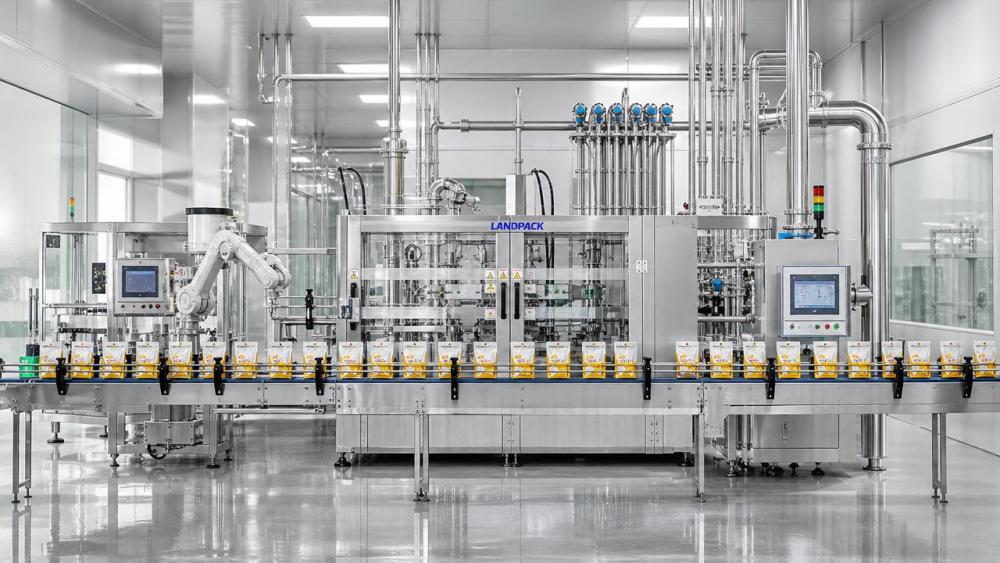
Another visible signal is that bottlenecks are shifting from isolated machines to interconnected systems. A filler may run faster, but if CIP cycles are too long, pouch sealing inspection slows discharge, or chilled raw material arrival becomes unpredictable, real output remains capped. This is why leading conversations around industrial food systems increasingly connect process engineering, packaging automation, microbial risk control, utilities, and digital intelligence in one planning framework rather than treating them as separate operational topics.
The strongest trend signals shaping industrial food systems this year
Several trend signals stand out across the broader food and beverage landscape. First, higher product mix is reducing the usefulness of fixed-capacity assumptions. More SKUs, shorter runs, and frequent format changes mean that available production time matters more than theoretical maximum speed. Second, food safety standards are becoming more process-specific, especially in sterile filling, cold-chain sensitive products, and ready-to-eat categories. Third, energy and water costs are changing investment logic, pushing facilities to evaluate capacity per kilowatt, per cubic meter of water, and per sanitation cycle.
A fourth signal is the growing role of smart diagnostics. In advanced industrial food systems, AI vision, sensor fusion, and digital twins are not only quality tools; they are capacity tools. They identify micro-stoppages, forecast wear, optimize thermal curves, and reduce wasted changeovers. As a result, factories that once expanded capacity by adding new lines are increasingly looking first at hidden capacity recovery inside existing assets.
What is driving the change in industrial food systems capacity planning
The forces behind this transition can be summarized clearly:
Together, these factors are redefining what “enough capacity” means in industrial food systems. The question is no longer simply whether a line can run fast. The more useful question is whether the system can run fast, clean, flexibly, and repeatedly under real operating constraints.
How the shift affects core processing and packaging segments
In aseptic beverage filling, the main issue is no longer just high-speed operation. Capacity planning depends on sterile zone stability, cap and preform handling consistency, validation discipline, and the interaction between upstream UHT treatment and downstream packaging flow. For bakery systems, thermal uniformity is becoming a planning variable because uneven heat distribution creates waste, rework, and output distortion even when oven length appears sufficient.
In meat processing, low-temperature continuity, cutting precision, and marination cycle timing directly influence usable capacity. Small breakdowns in chilling discipline can force slower line speeds or reinspection. In dairy, homogenization pressure stability and downstream filling alignment determine whether quality can be maintained at higher throughputs. In flexible packaging, advanced industrial food systems now depend heavily on seal integrity analytics, AI inspection, and synchronized weighing, because a fast machine without reliable pouch quality creates expensive hidden losses.
- Aseptic lines: capacity is linked to sterility assurance and CIP/SIP optimization.
- Baking equipment: capacity is linked to thermal consistency and recipe repeatability.
- Meat machinery: capacity is linked to temperature control, yield, and safe handling flow.
- Dairy homogenizers: capacity is linked to emulsion stability and downstream compatibility.
- Pouch packaging: capacity is linked to weighing accuracy, seal strength, and low-defect automation.
The planning priorities that deserve closer attention now
The most important takeaway for 2026 is that industrial food systems should be planned around constraint visibility, not only expansion ambition. Hidden limits often sit in hygiene windows, utility loads, micro-stoppages, product transition losses, or packaging quality checks. Better planning starts with identifying where nominal capacity and effective capacity diverge.
Key priorities include:
- Measure effective throughput: Track output after sanitation, downtime, startup loss, rejects, and changeovers.
- Map utility dependencies: Validate steam, refrigeration, water, and compressed air limits before approving expansion assumptions.
- Design for hygienic uptime: Favor equipment and layouts that reduce cleaning complexity and contamination risk.
- Protect flexibility: Prioritize modular controls, quick format change, and recipe traceability for mixed-product environments.
- Use data as a capacity lever: Apply predictive maintenance and line analytics to recover hidden output before adding capital.
A practical decision framework for industrial food systems in 2026
A useful way to respond is to adopt a staged framework rather than relying on one-time line speed comparisons. This approach improves the quality of investment and avoids overestimating future output.
What the next move should look like
The most effective next step is not always a major expansion. In many industrial food systems, stronger results come from integrating hygienic engineering, process intelligence, and packaging synchronization before new capital is deployed. A clear diagnostic of true constraints can reveal whether the right answer is faster aseptic filling, better homogenizer stability, improved oven airflow control, smarter pouch inspection, or a stronger cold-chain interface upstream.
This is where a structured intelligence view becomes valuable. AFPS tracks the technologies, validation logic, and operational signals that matter across aseptic filling, dairy fluid processing, meat deep processing, commercial baking, and high-speed flexible packaging. For any organization assessing the future of industrial food systems, the winning approach in 2026 is clear: plan capacity as a system, not a machine count; treat hygiene and efficiency as one equation; and use data to unlock output that already exists but remains hidden.
If the goal is stronger throughput with lower risk, begin by reviewing where effective capacity is lost today, compare that with changing compliance and product-mix demands, and build a roadmap that aligns process, packaging, and utilities. In a market where food safety, flexibility, and speed increasingly move together, that discipline will define which industrial food systems stay competitive through 2026 and beyond.
Recommended News